Vlamis Logo Vlamis Software Solutions

Training Courses

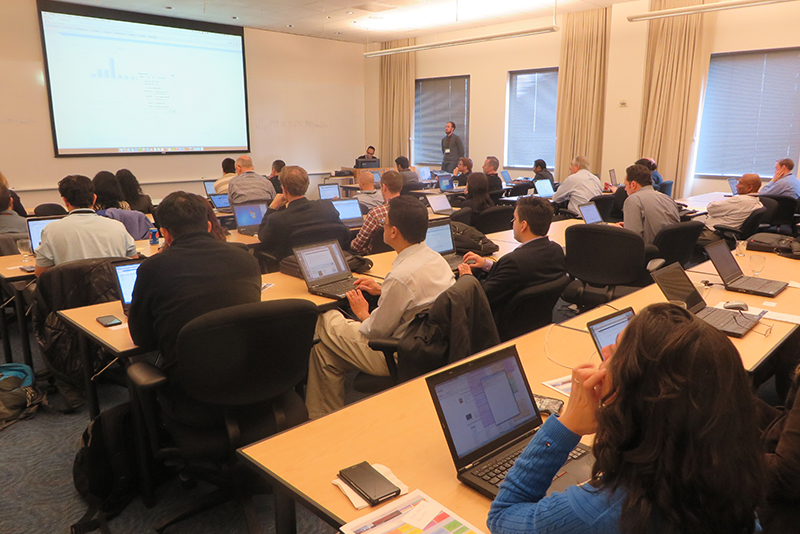
Vlamis Software Solutions currently offers the following classes. Classes can be customized or created to meet your needs. We can provide classroom-style instruction at our own facilities in Kansas City or on-site at your location. We can also provide individual hands-on remote mentoring using teleconferencing. We generally use the latest released version of the software for our classes.

Instructor-led courses from Vlamis Software Solutions may be taught at your location, and can be presented to as many as 12 students per class. To find out more, including scheduling and pricing, call us at (816) 781-2880.

Please contact Dan Vlamis at 816-781-2880 for pricing and more information.

Introduction to Oracle BI Answers

Course description: This one-day, hands-on, instructor-led course covers Oracle Answers, the ad-hoc query portion of the Oracle Business Intelligence Enterprise Edition suite (OBIEE). Students "learn by doing", completing hands-on exercises that will introduce them to many of the tools available in the Answers environment. In this classroom-style presentation, students learn to develop objects such as simple data tables, pivot tables, charts and graphs, filters, conditional formatting, gauges, and many other objects and features available in OBIEE Answers.

Audience: This course is appropriate for those who will be developing an end-user interface in OBIEE (typically members of the development team or the power users), as well as for the more casual users who may need to create their own analysis objects from time to time.

Introduction to Oracle BI Dashboards and Delivers

Course Description: This one-day, hands-on, instructor-led course covers Oracle BI Dashboards and Delivers, two parts of the Oracle Business Intelligence Enterprise Edition suite (OBIEE). Students "learn by doing", completing hands-on exercises that will introduce them to many of the tools available in these two Oracle offerings.

The BI Dashboards portion of the class covers such topics as dashboard design and layout, integrating content developed in the BI Answers environment, using navigation links to access related queries, linking to external content (such as web sites, spreadsheets, and reports), creating and using saved selections and dashboard prompts, and dashboard administration.

The BI Delivers portion of the class covers the development of custom alerts (iBots) in OBIEE, including such topics as defining iBots, iBot personalization, defining trigger conditions for iBot execution, scheduling iBots, and defining recipients, contents, and delivery methods for iBots.

Audience: This course is appropriate for those who will be developing an end-user interface in OBIEE (typically members of the development team or the power users), as well as for the more casual users who may wish to create or customize their own personalized dashboards and/or alerts.

Introduction to Oracle BI Server Administrator

Course Description: This two-day, hands-on, instructor-led course covers Oracle's BI Administration Tool, the Window-based tool for managing the Oracle BI Server metadata layer, security, caching, and other features of the OBIEE environment. Students "learn by doing", completing hands-on exercises that will introduce them to the concepts and techniques required to create an Oracle BI repository. In this classroom-style presentation, students are introduced to the various components of the Oracle BI architecture, then create an Oracle BI repository, starting with importing data sources into the Physical Layer, continuing with the transformation of that data into a Business Model, and finally creating the user-visible Presentation Layer. Students will learn techniques such as creating dimensions and hierarchies, creating time-series data (such as month-ago or year-to-date), using aggregate tables and repository variables, and modeling security.

The course can include content specific to Oracle's multi-dimensional data sources, Hyperion Essbase or Oracle OLAP, which employ slightly different techniques, primarily within the Business Model layer, for building the repository.

Audience: This course is appropriate for the members of the metadata development team, which will typically include Data Warehouse Administrators and Analysts, Data Modelers, or Application Developers. It is also quite useful for Database Administrators, End User Interface Developers, and even End Users to attend the class, so that they can communicate effectively with the Administration team during the design and deployment of the system and so they can appreciate what can be accomplished with simple changes.

Configuring Oracle BI

Description coming soon!

Introduction to Oracle OLAP

In this course, students learn the fundamentals of Oracle OLAP. Students will also become familiar with designing and developing OLAP applications. The various ways that the data can be accessed will also be discussed and demonstrated. Additional topics include administration, tuning, storage, and performance monitoring.

OLAP DML and Express SPL

In this course, students learn to create Analytic Workspaces in Oracle OLAP and to perform analytic analysis of data. Students will also become familiar with using the OLAP data manipulation language to create objects, populate databases, and to perform complex analytical calculations. They explore online analytical processing functionality, including how to aggregate and allocate data, create custom elements, work with subsets, and use the built-in functions to analyze data.

Developing BI Applications using JDeveloper and BI Beans

In this course, students learn the fundamental techniques for creating Business Intelligence (BI) applications using Oracle JDeveloper with the BI Beans. Students will also become familiar with the entire development lifecycle, including creating OLAP Catalog metadata, managing an OLAP Services instance, managing the BI Beans catalog, setting up the BI application framework, creating BI application objects, developing BI Beans HTML client and Java client applications, and deploying BI Beans HTML client and Java client applications.